 admin
admin
Simple morning routine habits can help you start the day with more energy, less stress, and a clearer sense of what needs to get done. You do not need to wake up at 5 a.m., exercise for an hour, or follow a complicated schedule to have a productive morning.
A useful morning routine is one you can repeat most days without feeling exhausted by it.
The best habits are often small. Drinking water, getting some natural light, making your bed, eating a balanced breakfast, and spending a few quiet minutes planning the day can create a steady start.
Why Morning Habits Matter
The first part of your day can influence how you approach the hours that follow. A rushed morning often means skipping breakfast, forgetting tasks, searching for misplaced items, or starting work while already feeling stressed.
A simple routine creates structure.
It can help you:
- Wake up more consistently
- Reduce morning decisions
- Get your body moving
- Prepare mentally for the day
- Focus on important tasks
- Create time for yourself
- Avoid starting the day with unnecessary distractions
The goal is not to make every morning perfect. Some days will be busy, and your routine may need to change.
Simple Morning Routine Habits to Try

You do not need to adopt every habit at once. Choose two or three that fit your lifestyle and build from there.
1. Wake Up at a Consistent Time
A regular wake-up time can make your daily schedule easier to manage.
Your body uses a roughly 24-hour circadian rhythm to regulate sleep and wakefulness. Keeping your sleep and wake times relatively consistent can support a healthier sleep pattern.
Try to wake up around the same time on most days, including weekends when practical.
The key is getting enough sleep. Adults generally need at least seven hours of sleep per night, according to the American Academy of Sleep Medicine and Sleep Research Society.
A consistent wake-up time will not help much if you regularly stay up too late.
2. Avoid Checking Your Phone Immediately

Your phone can quickly turn a calm morning into a stream of notifications, messages, news, and social media.
You do not have to completely avoid your phone. Instead, delay checking it for 15 to 30 minutes if possible.
Use that time to:
- Get out of bed
- Drink water
- Open the curtains
- Wash your face
- Stretch
- Prepare for the day
If you use your phone as an alarm, consider placing it somewhere that requires you to get out of bed to turn it off.
3. Drink Some Water
You lose water during sleep through breathing and normal bodily processes. Drinking water after waking can help you replace fluids.
There is no need to force yourself to drink a huge amount immediately.
A glass of water is a simple starting point.
Keep a reusable bottle near your kitchen or desk if that makes the habit easier to remember.
4. Get Natural Morning Light
Getting outside or sitting near bright natural light after waking can be a useful part of a healthy morning.
Morning light helps your body’s internal clock understand that it is daytime. This can support normal sleep-wake timing.
Try:
- Taking a short walk outside
- Drinking your morning tea near a bright window
- Sitting on a balcony
- Opening curtains as soon as you wake up
You do not need to stare directly at the sun. Normal outdoor light is enough, and you should protect your eyes from excessive sunlight.
A Simple Morning Routine Example
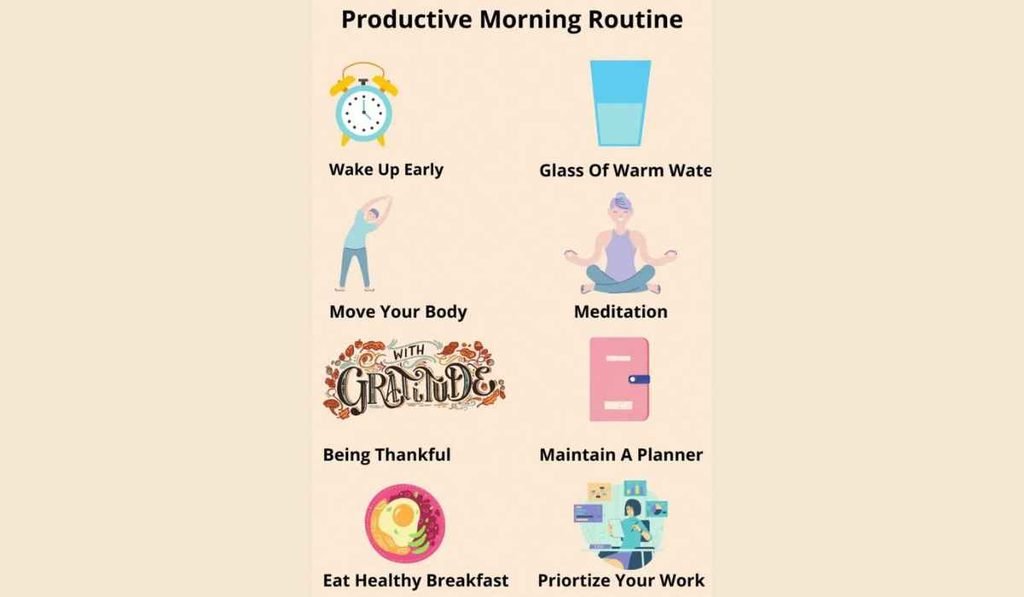
If you are unsure where to begin, use a basic schedule rather than creating a long checklist.
| Time | Habit | Purpose |
| 7:00 | Wake up | Start the day consistently |
| 7:05 | Drink water | Replace fluids |
| 7:10 | Open curtains or go outside | Get morning light |
| 7:20 | Stretch or walk | Get your body moving |
| 7:35 | Shower and get dressed | Prepare for the day |
| 7:50 | Breakfast | Support your morning energy |
| 8:10 | Review priorities | Decide what matters most |
You can shift these times to match your work, school, family, and sleep schedule.
5. Move Your Body
Morning exercise does not have to mean a full gym workout.
Even five to 15 minutes of movement can help you feel more awake and ready to start the day.
Try:
- Gentle stretching
- Walking
- Bodyweight exercises
- Yoga
- Light cycling
- Mobility exercises
If you enjoy longer workouts, morning may be a good time to schedule them. If you do not enjoy exercise early in the day, there is no need to force it.
The most useful exercise routine is one you can maintain.
A Quick Five-Minute Movement Routine
You could try:
- One minute of gentle walking.
- One minute of shoulder and arm movements.
- One minute of bodyweight squats.
- One minute of gentle stretching.
- One minute of slow breathing.
Keep movements comfortable and stop if you feel pain or become unwell.
6. Eat a Balanced Breakfast

Breakfast does not have to be large or complicated.
Choose foods that provide a mix of nutrients, such as protein, fiber, carbohydrates, and healthy fats.
Simple options include:
- Eggs with whole-grain toast
- Yogurt with fruit and nuts
- Oatmeal with fruit
- Whole-grain cereal with milk
- Peanut butter on whole-grain toast
Some people prefer not to eat immediately after waking, and that can be reasonable depending on their preferences and overall eating pattern.
The important point is to choose foods that help you feel satisfied and fit your normal diet.
7. Make Your Bed
Making your bed takes only a few minutes, but it gives your bedroom an immediate sense of order.
It also creates a small task that you can complete early in the day.
Do not treat it as a major productivity technique. It is simply an easy habit that can make your space feel cleaner.
If you have children, making the bed can also become part of a simple morning checklist.
8. Take a Few Minutes to Plan
One of the most useful simple morning routine habits is deciding what actually needs your attention.
Instead of writing a long to-do list, choose your top three priorities.
For example:
- Finish a work report.
- Buy groceries.
- Call the dentist.
You can then add smaller tasks if you have time.
This approach keeps the morning focused without turning your schedule into a long list of unfinished tasks.
9. Practice a Few Quiet Minutes
A quiet start can help you avoid immediately filling your mind with information.
You could spend five minutes:
- Reading
- Journaling
- Praying or reflecting
- Practicing slow breathing
- Sitting quietly
- Listening to calm music
You do not need to meditate for 30 minutes to benefit from a few peaceful moments.
The purpose is simply to give yourself a short period without constant notifications or demands.
10. Prepare the Night Before
A good morning often begins the previous evening.
Before going to bed, prepare a few things:
- Choose your clothes.
- Pack your work or school bag.
- Prepare breakfast ingredients.
- Put keys in the same place.
- Check your schedule.
- Set your alarm.
- Tidy the main room.
This can remove several small decisions from your morning.
It is especially helpful for parents, students, and people who need to leave home early.
How to Build a Morning Routine That Actually Lasts
Starting with ten new habits at once usually makes a routine difficult to maintain.
Instead, build it gradually.
Week 1: Choose two habits
Start with something easy, such as drinking water and making your bed.
Week 2: Add movement
Include a five- or 10-minute walk or stretching session.
Week 3: Add planning
Spend a few minutes identifying your most important tasks.
Week 4: Adjust
Look at what is working and remove anything that feels unnecessary.
This gradual approach makes simple morning routine habits easier to turn into normal behavior.
Common Morning Routine Mistakes
A morning routine can become stressful if you make it too complicated.
Avoid:
- Waking up much earlier than necessary
- Copying another person’s routine exactly
- Trying to complete too many tasks
- Skipping sleep to fit in exercise
- Checking social media for long periods
- Creating unrealistic daily goals
- Feeling guilty when your routine changes
Your routine should support your life rather than control it.
If you work night shifts, care for young children, or have an irregular schedule, your ideal morning may look completely different from someone else’s.
How to Make Your Routine Easier
Convenience matters.
If you want to drink water, keep a bottle where you can see it. If you want to walk, put your shoes somewhere easy to reach. If you want to journal, leave the notebook on your desk.
Make good habits obvious and easy.
You can also connect a new habit to something you already do.
For example:
- After brushing your teeth, drink water.
- After drinking water, open the curtains.
- After getting dressed, review your priorities.
- After breakfast, check your schedule.
This creates a natural chain rather than a collection of unrelated tasks.
What a Realistic Morning Looks Like
A healthy morning does not need to look impressive on social media.
You might wake up, drink water, shower, eat breakfast, check your calendar, and leave for work. That can be enough.
Other days may be slower. You might sleep later, skip exercise, or have to deal with an unexpected problem.
That does not mean your routine has failed.
Consistency matters more than perfection.
The best simple morning routine habits are the ones that fit your actual schedule and help you feel prepared instead of pressured.
FAQs
- What are the best simple morning routine habits?
- Consistent sleep times, morning light, hydration, movement, a balanced breakfast, and simple planning are useful starting habits.
- How many habits should I include in my morning routine?
- Start with two or three habits and add more only when the routine feels easy to maintain.
- What should I do first after waking up?
- Getting out of bed, drinking some water, and getting natural light are simple ways to begin your morning.
- Can a morning routine improve productivity?
- A consistent routine can reduce unnecessary decisions and help you identify important tasks before the day becomes busy.
- How long should a morning routine take?
- There is no required length, and even a 15- to 30-minute routine can provide useful structure before work or other responsibilities.
You do not need a perfect morning to have a good day. Pick a few habits that make your mornings calmer, keep them realistic, and give yourself room to adapt when life gets busy. Small routines become powerful when you can actually stick with them.