
 admin
admin
The easiest way to declutter clothes is to stop trying to organize everything at once and make simple decisions about what you actually wear, need, and enjoy. A smaller wardrobe is easier to manage, easier to clean, and can make getting dressed each morning much less stressful.
Clothes tend to accumulate slowly. A shirt bought on sale here, an old pair of jeans there, and suddenly your closet is full of pieces you rarely touch. Some may no longer fit, while others are worn out, uncomfortable, or simply forgotten.
The good news is that you do not need to throw away half your wardrobe in one afternoon. A practical sorting system can help you clear space without making decisions you will regret.
Why Decluttering Clothes Can Feel Difficult
Clothing is more than fabric. Some pieces are connected to memories, expensive purchases, special occasions, or hopes about how we might dress in the future.
You may keep a jacket because it was expensive, even though you never wear it. You might hold onto jeans that are too small because you hope they will fit again. A formal outfit may stay in your closet for years because you remember wearing it to an important event.
These emotional connections make clothing harder to sort than ordinary household clutter.
The goal is not to create an extremely small wardrobe. The goal is to make your existing wardrobe useful.
A good closet should contain clothes that fit your current lifestyle, body, preferences, and daily needs.
The Easiest Way to Declutter Clothes Starts With One Category
One of the biggest mistakes is pulling every piece of clothing out of the closet and creating a giant pile on the bed.
That can quickly become overwhelming.
Instead, choose one category at a time.
For example:
- T-shirts
- Jeans and trousers
- Dresses or formal clothing
- Jackets
- Shoes
- Workout clothes
- Sleepwear
- Accessories
Take one category and make a decision about every item before moving to the next.
This keeps the process manageable and makes it easier to notice duplicates. If you have ten black T-shirts, for example, you can compare them directly instead of making separate decisions weeks apart.
Use the Four-Pile Clothing Method

Create four groups before you start sorting.
| Category | Keep When | Action |
| Keep | You wear it and it fits your life | Return it to the closet |
| Donate | It is useful but no longer needed | Put it in a donation bag |
| Sell | It has enough value to justify selling | List it within a set deadline |
| Recycle/Discard | It is damaged or unusable | Use appropriate textile recycling or disposal |
This system gives every item a clear destination.
Try not to create a huge “maybe” pile. If you are unsure about several pieces, place them in a separate box and set a review date. This prevents indecision from stopping the entire project.
Ask These Questions About Every Item
When you are unsure whether to keep something, ask a few direct questions.
Does It Fit Me Now?
Do not organize your wardrobe around clothes that you might fit into someday.
If something is uncomfortable, too tight, too loose, or no longer suits your current body, think carefully about whether it deserves valuable closet space.
Have I Worn It Recently?
Think about your actual behavior rather than your intentions.
If you have not worn something for a long time, ask why. Maybe it is uncomfortable. Maybe you have better alternatives. Maybe the style no longer feels like you.
Would I Buy It Again?
Imagine seeing the item in a store today.
Would you spend your money on it again?
If the answer is no, that can be a strong sign that you are keeping it because of guilt, habit, or the money you already spent.
Do I Have Something Similar?
Duplicate clothing is one of the easiest areas to reduce.
You may not need six nearly identical sweaters or several pairs of jeans that serve exactly the same purpose.
Keep the versions you like wearing most.
Use the One-Year Rule, But Be Flexible
A common clothing decluttering rule is to remove anything you have not worn in the past year.
This can be useful, but it should not be treated as an absolute law.
Some clothing is naturally seasonal. You may not wear a winter coat for months, but that does not mean it should leave your wardrobe.
The same applies to:
- Formal clothing
- Special occasion outfits
- Cold-weather gear
- Rainwear
- Sports equipment
- Traditional clothing
- Clothing needed for specific work situations
Instead of asking only whether you have worn something in the last year, ask whether there is a realistic reason you will use it again.
Deal With Clothes That Need Repairs
A closet can become a storage area for unfinished projects.
You might have a shirt missing a button, trousers that need altering, or a jacket with a broken zipper.
Be honest about whether you are actually going to repair these items.
Make a small repair pile and give yourself a deadline. If you still have not repaired something after a reasonable period, decide whether the cost and effort are worth it.
This is especially useful for clothing that has been sitting untouched for months.
An item does not become valuable simply because you intend to fix it.
Handle Sentimental Clothes Carefully

Sentimental clothing deserves a different approach.
Perhaps you have an old sports jersey, a wedding outfit, a childhood sweater, or clothing that belonged to someone you care about.
You do not have to throw these things away just to have an organized closet.
Instead, consider keeping only the pieces that have real meaning.
For larger collections, you can:
- Keep one representative item
- Photograph pieces before donating them
- Store special clothing separately
- Turn meaningful fabric into a quilt or craft project
- Give certain pieces to family members
The important question is whether you value the item itself or simply the memory attached to it.
Sometimes a photograph can preserve the memory without requiring you to keep a large amount of clothing.
Make a Keep Pile You Can Actually Manage
The easiest way to declutter clothes is not necessarily removing the most items. It is keeping the right items.
Once you have sorted a category, look at the keep pile.
Do the clothes work together?
Can you create several outfits from what remains?
Are there pieces you always choose over similar items?
If you repeatedly reach for the same five shirts, there is probably a reason. Your wardrobe should reflect what you genuinely like wearing.
A useful closet is not based on the number of pieces you own. It is based on how often those pieces work for you.
What to Do With Clothes You Remove
Removing clothes from your closet is only half the job.
The unwanted pieces need to leave your home.
For clothes in good condition, donation may be a practical option. Valuable items may be worth selling through an appropriate marketplace. Damaged textiles may be suitable for textile recycling programs depending on what is available in your area.
Before donating, check the requirements of the organization. Some groups have specific rules about what they can accept.
For clothing you plan to sell, set a deadline.
For example:
List within 7 days.
If you have not listed the item by then, ask whether selling it is actually worth the effort. This keeps your “sell” pile from becoming another permanent storage area.
Create a Simple Clothing Decluttering Schedule
You do not have to finish your wardrobe in one session.
A short schedule can make the process easier.
| Session | Clothing Category | Suggested Time |
| 1 | T-shirts and tops | 20 minutes |
| 2 | Jeans and trousers | 20 minutes |
| 3 | Jackets and coats | 20 minutes |
| 4 | Shoes | 20 minutes |
| 5 | Workout and casual clothes | 20 minutes |
| 6 | Formal and seasonal clothing | 30 minutes |
| 7 | Review and remove unwanted items | 15 minutes |
These times are only practical targets, not strict rules.
If you have a large wardrobe, spread the work over several days or weekends.
Stopping before you become exhausted can actually help. You want to make clear decisions rather than rushing through the last part simply because you are tired.
Organize Your Remaining Clothes
Once you have removed unwanted clothing, organize what remains based on how you use it.
You could group clothing by:
- Type
- Season
- Color
- Frequency of use
- Work and casual wear
There is no single correct system.
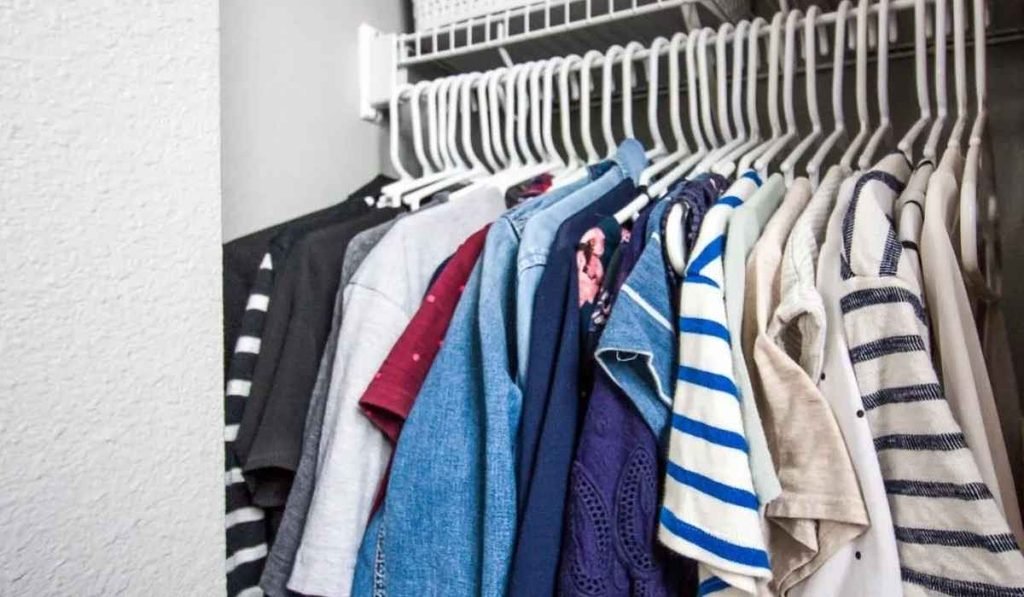
If you wear certain shirts every week, keep them somewhere easy to reach. Less frequently used seasonal items can go into a separate area.
Avoid filling every available space. Leaving some room between clothes makes it easier to see what you own and put things away.
Avoid Buying More Clothes Too Quickly
After cleaning your closet, it can be tempting to replace everything with new pieces.
Give yourself some time first.
Wear the clothes you kept and notice what is actually missing. You may discover that you already have enough outfits.
Before buying something new, ask:
- Do I already own something similar?
- Can I create multiple outfits with it?
- Does it fit properly?
- Will I realistically wear it?
- Where will I store it?
- Is it replacing something I already own?
A short pause before shopping can prevent your newly organized wardrobe from becoming crowded again.
How to Keep Your Closet Decluttered
The easiest way to declutter clothes becomes even easier when you stop unnecessary items from returning.
Try a quick wardrobe review every few months.
You do not need to repeat the entire process. Look for clothes that have stopped fitting your lifestyle, pieces you never reach for, and items that have become damaged.
You can also use a simple one-in, one-out rule. When you buy a similar new item, consider removing an older one.
Another useful habit is putting clothes away immediately rather than allowing clean laundry to become a permanent pile.
Small habits prevent large cleanup projects.
FAQs About the Easiest Way to Declutter Clothes
- What is the easiest way to declutter clothes?
- Sort one clothing category at a time and divide items into keep, donate, sell, and recycle or discard groups.
- How do I know which clothes to get rid of?
- Consider removing clothing that does not fit, is uncomfortable, goes unused, or no longer suits your current lifestyle.
- Should I throw away clothes I have not worn in a year?
- Not always, because seasonal, formal, and specialized clothing may be used less frequently but still serve a purpose.
- What should I do with clothes that are too valuable to donate?
- Consider selling them if their expected value is worth the time required to photograph, list, and arrange the sale.
- How can I stop my closet from becoming cluttered again?
- Review your wardrobe regularly, avoid unnecessary purchases, and consider removing an older item when adding a similar new one.
A decluttered wardrobe does not have to be tiny or perfectly arranged. It simply needs to contain clothes that fit your life and make getting dressed easier. Start with one category, make honest decisions, and let your closet become a collection of things you actually enjoy wearing.








[…] people ask how do you make a morning routine stick to it?, one of the best answers is to start smaller than you think you need […]