
 admin
admin
What does negative free cash flow mean? It means a company spent more cash on its business and investments than it generated from its operations during a specific period.
That does not automatically mean the company is in financial trouble. A business can have negative free cash flow because it is building new factories, expanding data centers, developing products, acquiring assets, or investing heavily for future growth. The important question is why cash flow is negative and whether the company can afford to keep spending at that level.
For investors, free cash flow is one of the most useful measures for understanding the financial health of a business. Unlike accounting profit, it focuses on actual cash generated and used by the company.
What Is Free Cash Flow?
Free cash flow, commonly called FCF, is the cash a company has left after paying for the capital expenditures needed to maintain or grow its business.
A commonly used formula is:
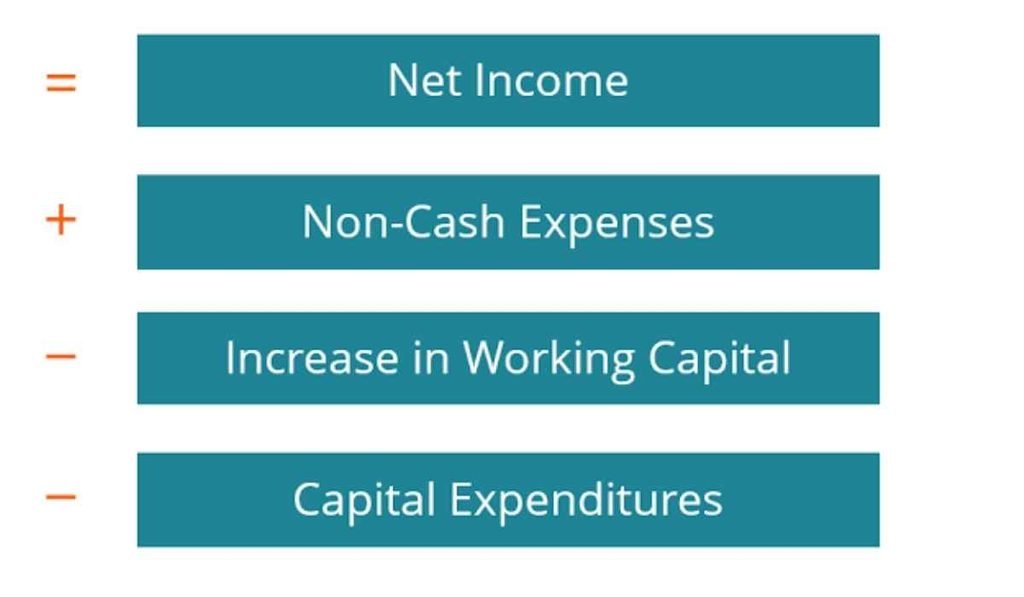
Free Cash Flow = Operating Cash Flow − Capital Expenditures
Operating cash flow shows how much cash the company generated from its normal business activities.
Capital expenditures, or CapEx, represent money spent on long-term assets such as:
- Buildings
- Equipment
- Factories
- Servers
- Data centers
- Vehicles
- Technology infrastructure
- Property and facilities
For example, suppose a company generates $500 million in operating cash flow and spends $650 million on capital expenditures.
Its free cash flow would be:
$500 million − $650 million = −$150 million
The company has negative free cash flow of $150 million.
What Does Negative Free Cash Flow Mean for a Company?
When people ask what does negative free cash flow mean, they are usually trying to understand whether a company is spending more cash than it can generate internally.
Negative FCF means the company’s cash inflows from operations were not enough to cover its capital spending during that period.
The company may need to fund the gap through:
- Existing cash reserves
- New borrowing
- Selling assets
- Issuing shares
- Other financing activities
That is why negative FCF needs context.
A company experiencing negative cash flow for one quarter may be perfectly healthy. A company that produces negative FCF year after year may face a much bigger problem.
Negative Free Cash Flow Does Not Always Mean a Bad Business
One of the biggest mistakes investors make is assuming that negative FCF automatically means a company is losing money.
That is not necessarily true.
A profitable company can have negative free cash flow.
Consider a growing technology company that earns $200 million in accounting profit. It decides to spend $500 million building new data centers.
The company could still report a profit while its free cash flow becomes negative.
This happens because accounting profit and cash flow measure different things.
A business may be investing heavily today to generate larger cash flows several years from now.
Growth Companies and Negative FCF
Young and rapidly expanding companies often spend heavily on:
- Research and development
- New stores
- Manufacturing capacity
- Software infrastructure
- Employees
- Marketing
- Distribution networks
That spending can temporarily push FCF below zero.
The key question is whether the investment eventually produces higher revenue and stronger cash generation.
What Causes Negative Free Cash Flow?
There are several common reasons a company’s free cash flow can turn negative.
1. Heavy Capital Spending
The most direct reason is high capital expenditure.
A manufacturer might build a new factory. A cloud company might construct data centers. An energy company might develop new infrastructure.
These projects can require billions of dollars before they begin generating meaningful returns.
2. Rapid Business Expansion
A company may open new locations, increase inventory, hire employees, and expand distribution at the same time.
Cash can leave the business faster than it comes in.
3. Weak Operating Cash Flow
Negative FCF can also happen because the core business is not producing enough cash.
For example:
- Sales decline.
- Customers delay payments.
- Profit margins shrink.
- Operating costs increase.
- Inventory rises.
If operating cash flow falls significantly, even normal capital spending can push FCF into negative territory.
4. Large Acquisitions
Acquisitions can require substantial cash.
Although acquisitions are not always classified as capital expenditures in the simple FCF formula, they can have a major impact on a company’s overall cash position.
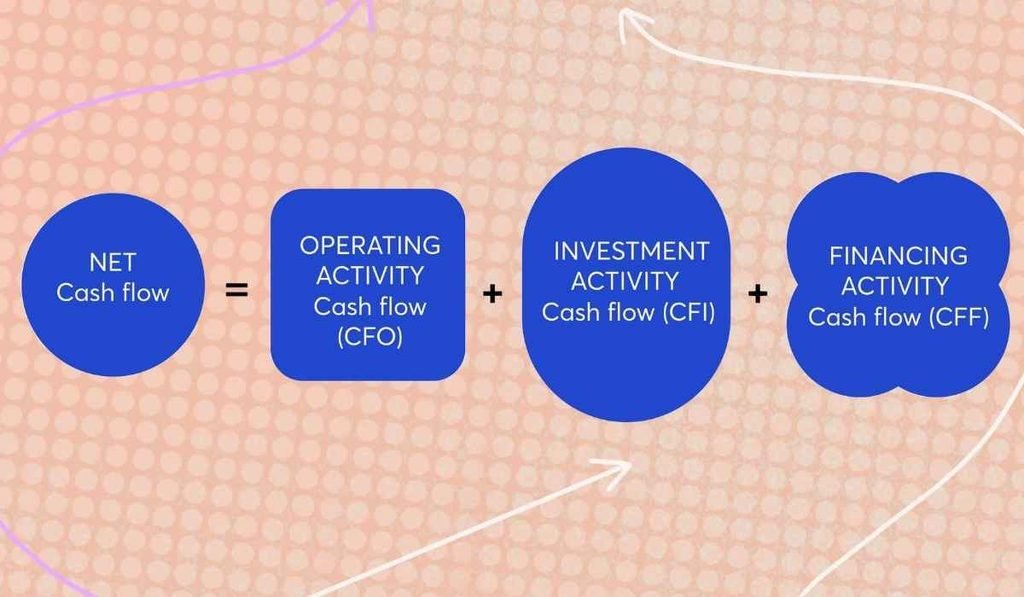
Investors should therefore examine the entire cash flow statement rather than looking at FCF alone.
What Does Negative Free Cash Flow Mean for Investors?

For investors, what does negative free cash flow mean depends heavily on the reason behind the negative number.
There is a big difference between a company spending cash on productive expansion and a company burning cash simply because its business is struggling.
Here is a useful comparison:
| Situation | Negative FCF | Potential Interpretation |
| New factory construction | Temporary | Growth investment |
| New data centers | Temporary or extended | Expansion |
| Falling operating cash flow | Concerning | Core business weakness |
| Large research investment | Potentially positive | Future growth |
| Repeated cash burn | Higher risk | Funding may become necessary |
| High debt plus negative FCF | Higher risk | Limited financial flexibility |
The number itself is only the starting point.
Negative FCF vs. Negative Net Income
These two terms are often confused.
Negative net income means the company reported an accounting loss.
Negative free cash flow means the company did not generate enough operating cash to cover its capital expenditures.
A company can have:
- Positive net income and negative FCF
- Negative net income and positive FCF
- Positive net income and positive FCF
- Negative net income and negative FCF
That is why investors should examine both profitability and cash generation.
Why Can a Profitable Company Have Negative FCF?
Capital spending is one major reason.
Imagine a company reports $100 million in net income but spends $250 million building a new production facility.
Its accounting profit is positive, but its free cash flow could still be negative.
The investment might create additional production capacity and increase future revenue.
That makes the negative FCF potentially less concerning than cash burn caused by declining sales.
How Long Can a Company Survive With Negative FCF?
There is no universal time limit.
It depends on the company’s cash reserves, debt, access to financing and expected future cash generation.
A company with $10 billion in cash and $500 million of annual negative FCF has much more flexibility than a company with $100 million in cash and $500 million of annual negative FCF.
Investors should check:
- Cash and cash equivalents
- Short-term investments
- Total debt
- Debt maturity dates
- Interest expenses
- Operating cash flow
- Annual capital expenditures
- Cash burn rate
A useful calculation is:
Cash Runway = Available Cash ÷ Annual Cash Burn
For example, if a company has $2 billion in available cash and burns $400 million per year, its simple cash runway would be about five years, assuming the burn rate stays constant.
That calculation is only a rough guide because spending can change significantly.
What Does Negative Free Cash Flow Mean in 2026?
The issue has become particularly important in 2026 because companies in areas such as artificial intelligence, cloud computing and advanced technology are making major infrastructure investments.
Large technology companies are spending heavily on data centers, chips, networking equipment and other infrastructure required to support AI services.
Reuters reported in August 2026 that investors were increasingly focused on the relationship between AI-related capital spending, earnings and free cash flow.
This creates an interesting situation.
A technology company might report strong revenue growth and rising earnings while also experiencing weaker free cash flow because capital spending is increasing rapidly.
For investors, the question becomes whether today’s spending will create enough future revenue and cash flow to justify the investment.
How to Tell If Negative FCF Is Healthy or Dangerous
When examining a company, don’t stop at the FCF number.
Use this five-step process:
1. Look at the Trend
Check free cash flow over several years.
A single negative quarter is less concerning than a consistent pattern of negative FCF.
2. Find Out Why Cash Flow Is Negative
Read the company’s cash flow statement and earnings report.
Ask whether the company is:
- Expanding
- Building new facilities
- Developing products
- Acquiring businesses
- Losing customers
- Dealing with higher costs
3. Compare FCF With Revenue
A company generating $1 billion in annual revenue and burning $800 million deserves more scrutiny than a company generating $100 billion and investing $5 billion.
The scale matters.
4. Check the Balance Sheet
A strong balance sheet can give a company time to invest through a period of negative FCF.
Look at cash, debt and other liquid assets.
5. Examine Future Expectations
Management should explain how current investments are expected to affect future revenue and cash flow.
If spending continues rising without a clear path to stronger returns, the risk increases.
Why Free Cash Flow Matters for Stock Valuation
Free cash flow is important because investors ultimately care about the cash a business can generate for its owners.
Companies can use positive FCF to:
- Pay dividends
- Repurchase shares
- Reduce debt
- Make acquisitions
- Invest in growth
- Build cash reserves
A business with strong and growing FCF often has more financial flexibility.
Negative FCF reduces that flexibility unless the spending is creating valuable future assets or growth.
This is also why investors often use price-to-free-cash-flow ratios when evaluating stocks.
However, a low or high ratio should not be viewed in isolation. Growth rates, industry conditions, debt, margins and future investment needs all matter.
What Does Negative Free Cash Flow Mean Before Buying a Stock?
Before investing in a company with negative FCF, ask these questions:
- Why is FCF negative?
- Has FCF been negative for one period or several years?
- Is revenue growing?
- Are profit margins improving?
- Does the company have enough cash?
- How much debt does it carry?
- Is capital spending expected to increase?
- When does management expect cash flow to improve?
- Are investors already pricing in strong future growth?
- Does the company have a clear path toward sustainable cash generation?
These questions can help distinguish temporary investment spending from persistent cash-flow problems.
FAQs
- What does negative free cash flow mean?
- It means a company’s operating cash flow was lower than its capital expenditures during a specific period.
- Is negative free cash flow always bad?
- No, it can result from investments in expansion, infrastructure, research or other projects designed to support future growth.
- Can a profitable company have negative free cash flow?
- Yes, a company can report positive net income while spending more cash on capital investments than it generates from operations.
- How long can a company have negative free cash flow?
- There is no fixed limit because survival depends on cash reserves, debt, financing access and the company’s ability to eventually generate more cash.
- Should I avoid stocks with negative free cash flow?
- Not necessarily, because investors should first determine whether the negative cash flow reflects productive growth investment or underlying business weakness.
The most useful way to think about negative free cash flow is not as an automatic warning sign, but as a question that needs an answer. What does negative free cash flow mean for one company can be completely different from what it means for another.
A growing business may be spending heavily today to build tomorrow’s revenue. A struggling company may be burning cash simply to keep operating. The difference is found in the cash flow statement, balance sheet, business model and future outlook.
For business inquiries, feedback, or guest post opportunities, contact timesstock1@gmail.com.








[…] dividend is a payment made by a company to eligible shareholders. Most commonly, dividends are paid in cash, although […]