 admin
admin
If you want to improve your sleep without medication, start by making your sleep schedule, bedroom, daytime habits, and evening routine work together.
Poor sleep can leave you tired, unfocused, irritable, and less productive the next day. The good news is that many sleep problems can improve through consistent habits. For adults, the CDC recommends at least 7 hours of sleep each night, while sleep quality also matters.
So, how can I sleep better without medication? The answer usually starts with simple changes rather than one special sleep trick. Your body responds well to regular timing, enough sleep opportunity, daytime activity, and a calm environment at night.
Why You May Be Having Trouble Sleeping
Before changing your routine, think about what may be keeping you awake.
Common causes of poor sleep include:
- An inconsistent bedtime or wake-up time
- Stress and worrying
- Caffeine late in the day
- Alcohol close to bedtime
- Too much screen use at night
- A noisy, bright, or uncomfortable bedroom
- Long or late daytime naps
- Lack of daytime physical activity
- Eating a large meal too close to bedtime
- Certain medicines or health conditions
Occasional poor sleep is normal. The bigger concern is when difficulty sleeping becomes frequent or starts affecting your daytime life.
How Can I Sleep Better Without Medication? Fix Your Sleep Schedule

A consistent sleep schedule is one of the most useful non-medication approaches.
Try to go to bed and wake up at approximately the same time every day, including weekends. A regular schedule helps reinforce your body’s sleep-wake rhythm. The National Heart, Lung, and Blood Institute recommends keeping sleep and wake times consistent and limiting weekend changes to roughly an hour.
Instead of choosing an unrealistic bedtime, work backward from your required wake-up time.
For example, if you need to wake at 7 a.m., make sure your schedule gives you enough time to get the sleep you need.
Do Not Chase Sleep by Staying in Bed
If you are lying awake for a long time, continuing to watch the clock can increase frustration.
For people with ongoing insomnia, cognitive behavioral therapy for insomnia, or CBT-I, is a recommended treatment. It uses behavioral and cognitive techniques to improve sleep rather than relying on medication.
If you regularly spend long periods awake in bed, a healthcare professional can help you learn appropriate CBT-I strategies.
Create a Better Bedroom for Sleep
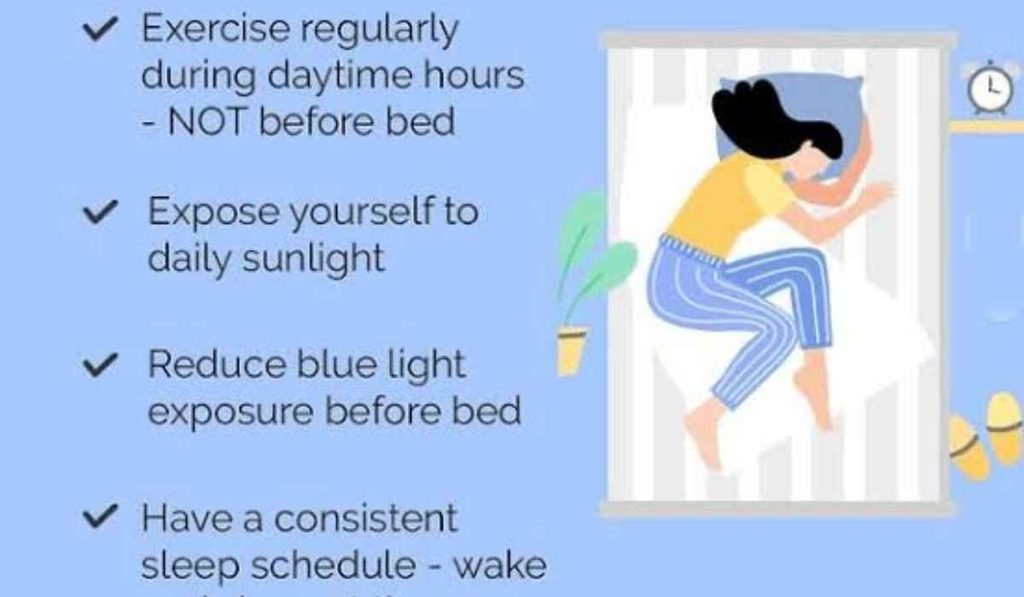
Your bedroom should make sleeping easy, not difficult.
Focus on three basic factors:
| Sleep factor | What to try |
| Light | Keep the room dark at night |
| Noise | Reduce disruptive sounds |
| Temperature | Keep the room comfortably cool |
| Mattress | Use a comfortable sleeping surface |
| Devices | Keep phones and bright screens away when possible |
| Clutter | Keep the sleeping area calm and relaxing |
NHLBI recommends a quiet, cool, and dark bedroom as part of healthy sleep habits.
You do not need an expensive bedroom makeover. Small changes can be enough.
Use curtains to block outside light, reduce unnecessary noise, adjust the room temperature, and make sure your pillow and mattress feel comfortable.
Build a Relaxing Nighttime Routine
Your brain needs time to move from daytime activity into sleep.
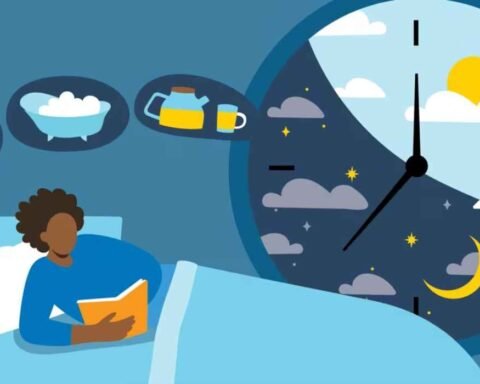
Instead of going directly from work, gaming, social media, or stressful conversations into bed, create a short wind-down period.
You could spend the last 30–60 minutes before bed doing quiet activities such as:
- Reading a paper book
- Taking a warm shower or bath
- Listening to calm music
- Doing gentle stretching
- Preparing clothes for tomorrow
- Writing down tomorrow’s tasks
- Practicing slow breathing
- Keeping the lights lower
The goal is not to create a perfect routine. The goal is to give your mind a predictable signal that the day is ending.
Limit Screens Before Bed

Phones and computers can make bedtime harder for several reasons. They provide bright light, keep your mind active, and can encourage you to keep scrolling long after you planned to stop.
NHLBI recommends using the hour before bed for quiet time and avoiding bright artificial light.
If putting your phone away for an hour feels unrealistic, start with 20 or 30 minutes.
You can also:
- Turn on a device’s night or dimming mode.
- Stop checking work messages before bed.
- Charge your phone away from your pillow.
- Use an ordinary alarm clock if checking your phone keeps you awake.
- Replace late-night scrolling with reading or music.
Consistency matters more than perfection.
Watch Your Caffeine Timing
Caffeine can stay in your system for several hours and may interfere with sleep.
Coffee is the obvious source, but caffeine is also found in tea, energy drinks, cola, chocolate, and some medicines. NHLBI advises avoiding caffeine close to bedtime because its effects can last for many hours.
If you have trouble sleeping, try moving your last caffeinated drink earlier in the day.
You may not need to eliminate caffeine. The important point is to see whether your timing affects your sleep.
Be Careful With Alcohol

Alcohol can make you feel sleepy, but that does not necessarily mean it improves sleep quality.
NHLBI recommends avoiding alcohol before bedtime when trying to improve sleep.
If you regularly drink in the evening and wake during the night, consider reducing or avoiding alcohol and watching whether your sleep changes.
Get Daytime Exercise and Natural Light
Your daytime behavior can affect what happens at night.
Regular physical activity can support better sleep. Natural light, especially earlier in the day, also helps regulate the body’s sleep-wake cycle. The CDC recommends getting natural light earlier in the day and being physically active as part of healthy sleep habits.
You do not need to start an intense workout program.
A simple routine could include:
- A morning walk
- Cycling
- Light strength training
- Stretching
- Household activities
- Outdoor activities
If possible, spend some time outside during the day. This can provide both natural light and movement.
How Can I Sleep Better Without Medication When My Mind Is Busy?
Stress can make falling asleep difficult because your body is tired while your mind keeps working.
Instead of trying to force yourself to stop thinking, give your thoughts somewhere to go before bedtime.
Try a short “worry list.” Write down the things bothering you and any tasks you need to handle tomorrow. You are not solving everything at night. You are simply getting those thoughts out of your head.
Slow breathing may also help you relax.
For example:
- Breathe in slowly.
- Let the breath out slowly.
- Relax your shoulders.
- Repeat for several minutes.
- Keep your attention on your breathing rather than checking the clock.
If anxiety or persistent stress is regularly interfering with sleep, consider discussing it with a healthcare professional.
Avoid Long or Late Naps
A nap can be useful when you are exhausted, but a long nap late in the day can make it harder to sleep at night.
If you need a nap, keep it relatively short and avoid taking it too close to bedtime. NHLBI recommends limiting naps to no more than about 20 minutes for adults who find that napping affects nighttime sleep.
If you sleep well at night without naps, there is no need to add one simply because it is part of someone else’s routine.
Do Not Eat a Heavy Meal Right Before Bed
A very large meal shortly before bedtime can be uncomfortable and may make falling asleep harder for some people.
Try to finish dinner with enough time to relax afterward. If you are hungry later, choose something light rather than turning bedtime into another full meal.
Also consider whether spicy, fatty, or acidic foods cause heartburn or discomfort at night.
Try a Simple 7-Day Sleep Routine
If you are not sure where to begin, avoid changing everything at once.
Use this simple plan:
Days 1–2: Set a consistent wake-up time.
Days 3–4: Move caffeine earlier and reduce late-night screen use.
Days 5–6: Add daytime movement and morning natural light.
Day 7: Review what changed and continue the habits that helped.
| Time of day | Simple habit |
| Morning | Wake at the same time and get natural light |
| Daytime | Stay active and avoid excessive naps |
| Afternoon | Keep caffeine timing in check |
| Evening | Lower stimulation and avoid heavy meals |
| Before bed | Use a calm wind-down routine |
| Night | Keep the bedroom dark, quiet, and comfortable |
You do not need to follow every recommendation perfectly. A few habits practiced consistently can be more useful than a complicated routine that lasts three days.
When Should You Get Help for Sleep Problems?
Lifestyle changes are useful, but they are not the answer to every sleep problem.
If you regularly struggle to fall asleep, stay asleep, or wake too early, speak with a healthcare professional. Persistent insomnia may benefit from CBT-I, which is recommended as a first-line treatment for chronic insomnia rather than simply relying on sleeping medication.
Also talk to a healthcare professional if you have symptoms that could suggest another sleep disorder.
For example, sleep apnea can cause repeated breathing interruptions during sleep. Symptoms can include loud snoring, gasping or choking during sleep, morning headaches, dry mouth, and excessive daytime sleepiness.
Do not start or stop prescription medicines because of sleep problems without discussing them with your healthcare provider.
How Can I Sleep Better Without Medication Over the Long Term?
The most effective approach is usually a repeatable routine rather than a single sleep hack.
Focus on these basics:
- Keep a consistent sleep and wake schedule.
- Give yourself enough time for sleep.
- Make your bedroom dark, quiet, and comfortable.
- Reduce bright screens before bed.
- Limit caffeine late in the day.
- Avoid alcohol close to bedtime.
- Stay active during the day.
- Get natural morning light.
- Keep naps short if they interfere with nighttime sleep.
- Use a relaxing wind-down routine.
- Get professional help when sleep problems continue.
Sleep improvement can take time. Do not judge your progress based on one bad night.
FAQs
- How can I sleep better without medication if I cannot fall asleep?
- Keep a regular schedule, create a relaxing bedtime routine, and consider CBT-I if insomnia continues.
- What is the best natural way to improve sleep?
- A consistent sleep schedule combined with enough sleep time, daytime activity, and a comfortable bedroom is a strong starting point.
- Does avoiding screens before bed really help sleep?
- Reducing bright artificial light and stimulating activities before bed can support healthier sleep habits.
- Can exercise help me sleep better without medication?
- Regular physical activity can support better sleep, especially when combined with consistent daily routines.
- When should I see a doctor about poor sleep?
- Seek professional advice when sleep problems persist, affect daytime life, or occur with symptoms such as loud snoring or nighttime gasping.
Better sleep does not have to begin with a bottle of pills. Start with a steady schedule, a calmer evening, a comfortable bedroom, and healthier daytime habits. Give those changes time, and if sleep still remains a struggle, getting professional guidance can help you find the real cause.