 admin
admin
You can travel with medicine on a plane by packing your essential medications in your carry-on bag, keeping them in their original containers when possible, and checking the rules for your airline and destination. Most everyday prescription and over-the-counter medicines are allowed, but liquid medications, controlled drugs, needles, and medicines needed for international travel may have extra requirements.
How to Travel With Medicine on Plane: The Basic Rules
Taking medicine on a flight is usually simple when you prepare before leaving home. The main things to consider are airport security, safe storage, prescription requirements, and the rules of the country you are visiting.
Follow these basic guidelines before your trip:
- Pack medicine in your carry-on: Keep essential medication with you instead of placing it in checked baggage.
- Use original packaging: Pharmacy labels and original containers can help identify your medication during security checks.
- Carry a prescription or doctor’s note: This is especially useful for prescription drugs, injectable medicines, and medications that may be restricted abroad.
- Check liquid medicine rules: Essential liquid medications may qualify for exceptions to standard liquid limits, depending on the airport and security authority.
- Research your destination: Some countries restrict medicines that are commonly available in other places.
- Bring enough for your trip: Pack an appropriate supply, including a small extra amount in case your return flight is delayed.
These steps reduce the chance of delays and help you manage your health throughout the journey.
Can You Take Prescription Medicine on a Plane?
Yes. Most prescription medicines are permitted on passenger flights, including tablets, capsules, inhalers, and many liquid medications. However, certain drugs may need additional documents or approval, particularly when they contain controlled substances.
Keep your medicine in its original pharmacy packaging whenever practical. The label should show your name, the medicine’s name, and the prescribing information when applicable.
If you use a weekly pill organizer, you can still use it to make daily doses easier to manage. However, consider keeping the original labeled containers with you, especially when crossing international borders.
Documents to Carry for Prescription Medicines
Depending on the medicine and your destination, useful documents may include:
- A valid prescription or a copy of it.
- A doctor’s letter explaining why you need the medication.
- A list of your medicines, including generic names and dosages.
- Import permits or other approvals required by your destination country.
For example, a traveler carrying ordinary blood pressure tablets may need little more than the labeled packaging. Someone carrying a controlled pain medicine or a prescription stimulant may face stricter rules and need advance authorization.
Do not assume that a valid prescription from your home country automatically makes a medicine legal everywhere.
Can You Bring Liquid Medicine Through Airport Security?

Liquid medication is generally allowed, but the rules depend on the airport and the security authority handling your screening.
In the United States, the Transportation Security Administration (TSA) allows medically necessary liquids in reasonable quantities exceeding the usual 3.4-ounce (100 ml) container limit. You should tell the security officer about these items and present them for separate screening if requested.
Other countries and airports may use different procedures, so check the official rules for your departure airport and any connecting airports.
Common examples of liquid medication include:
- Cough syrup and liquid antibiotics.
- Insulin and other injectable treatments.
- Prescription eye drops.
- Liquid pain relief.
- Medical solutions required for treatment.
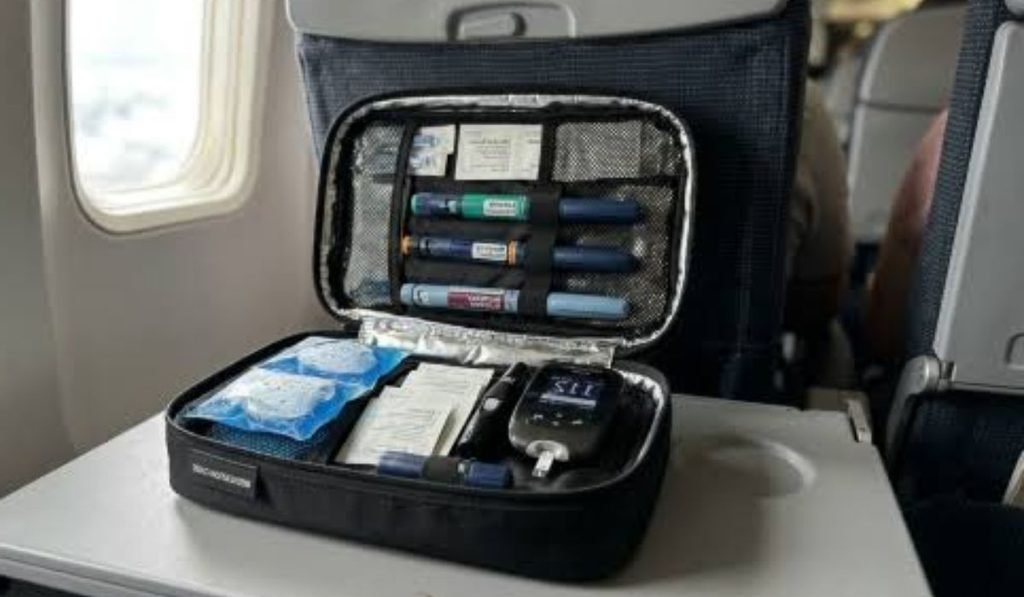
Keep liquid medicines in leak-resistant packaging and place them in an accessible part of your carry-on. If a medicine needs refrigeration, use an appropriate insulated medical bag and confirm the airline’s rules for cooling materials.
Do not assume that every liquid healthcare product receives the same exemption. Non-medical liquids, such as toiletries, may still be subject to standard restrictions.
Should You Pack Medicine in Carry-On or Checked Luggage?
For most travelers, a carry-on bag is the safer choice. Checked baggage may be delayed, lost, exposed to unsuitable temperatures, or separated from you during an unexpected change of flight.
Use this comparison when deciding how to pack your medication.
| Medicine or supply | Recommended packing method | Important consideration |
| Prescription tablets | Carry-on bag | Keep labeled packaging available |
| Over-the-counter tablets | Carry-on bag | Check destination restrictions |
| Liquid medication | Carry-on bag | Confirm liquid exemptions |
| Insulin and injectable medicine | Carry-on bag | Protect from extreme temperatures |
| Syringes and needles | Carry-on bag when needed | Carry supporting medical documents |
| Refrigerated medicine | Insulated medical bag | Follow the medicine’s storage instructions |
| Extra, nonessential supply | Carry-on or checked bag, where permitted | Keep enough essential medicine with you |
If you choose to put a backup supply in checked luggage, make sure you still have enough medication in your carry-on to cover delays and unexpected travel changes.
How to Pack Medicine for an International Flight
International trips require more planning because medicine laws differ from country to country. A product sold freely at a pharmacy at home may be controlled or prohibited at your destination.
1. Check Your Destination’s Medication Laws
Visit the official customs, health ministry, or medicines regulatory website for the country you are visiting. Look specifically for rules covering prescription medicines, controlled substances, medical cannabis, sleeping tablets, stimulants, and strong painkillers.
Some countries limit the quantity you can bring, require an import permit, or ask for a doctor’s certificate. Others require advance approval even when you have a valid prescription.
2. Check Every Country on Your Route
Your destination is not the only place that matters. If you have a connecting flight, check the rules that apply to medicines during transit, particularly if you must pass through immigration or collect and recheck your luggage.
A short airport connection may be straightforward, but an overnight stop or airport change can create different requirements.
3. Carry the Correct Documents
Keep your prescription, doctor’s letter, and any required permits somewhere you can access them easily. For controlled medication, verify whether the documents need to be translated, certified, or issued within a particular period.
4. Pack a Reasonable Supply
Bring enough medicine for your planned stay and a reasonable allowance for travel delays, within the quantity permitted by your destination. Large supplies can attract questions from customs officials, so carry documents that explain your medical needs.
5. Keep Medicines Clearly Identified
Avoid transferring pills into unmarked bags. Clear labeling helps security staff and customs officials identify the medicine and helps you avoid taking the wrong dose while traveling.
Can You Travel With Pills, Inhalers, and Medical Needles?

Most common medication forms can travel with passengers, but the type of medicine and the equipment you need can affect screening requirements.
Pills and Capsules
Tablets and capsules are generally permitted in carry-on luggage. Keep them in labeled packaging when possible, especially if they are prescription drugs or you are traveling internationally.
Inhalers and EpiPens
Medically necessary inhalers and epinephrine auto-injectors are generally permitted in carry-on bags. Keep them accessible and carry supporting medical information if you have it.
Do not place essential emergency medication in checked baggage, where you cannot reach it quickly.
Syringes and Needles
Unused syringes and needles associated with medically necessary injectable medicine are generally allowed under applicable security rules. Carry the medication with them, keep the supplies safely covered, and check the rules of your departure and transit airports.
Used needles should go into an approved sharps container, not loose in your bag.
Medical Devices and Refrigerated Treatments
If your treatment requires a pump, monitoring device, or cooling equipment, review the airline’s requirements before departure. Some equipment may need separate screening, and certain batteries or cooling materials have additional restrictions.
How to Keep Medicine Safe During a Flight

Packing your medication correctly is only part of the process. You also need to protect it from heat, cold, moisture, and missed doses.
Use these practical tips:
- Follow storage instructions: Check whether the medicine needs room-temperature storage, refrigeration, or protection from light.
- Keep it dry: Use a waterproof pouch to protect packaging from spills.
- Set reminders: Adjust medication reminders for time-zone changes when necessary.
- Carry emergency medicine nearby: Keep rescue inhalers, allergy medication, and other urgent treatments within reach.
- Avoid leaving medicine in a hot car: Heat can damage some treatments before you even reach the airport.
- Keep a medication list: Include medicine names, doses, allergies, and emergency contact information.
For refrigerated medicines, follow the manufacturer’s temperature limits. An ordinary ice pack may not maintain the correct temperature for a long journey, and direct contact with frozen packs can damage some products.
If your medication requires strict temperature control, ask your pharmacist how to transport it safely before departure.
Common Mistakes to Avoid When Flying With Medicine
Small packing mistakes can cause unnecessary stress at the airport. Avoid these common problems:
- Putting all medicine in checked baggage: A delayed suitcase can leave you without treatment.
- Ignoring controlled-drug laws: Some medicines require advance permits or are prohibited in certain countries.
- Assuming every airport has identical rules: Security procedures and liquid exceptions vary by location.
- Packing unmarked prescription pills: Unlabeled medication may be harder to identify during inspection.
- Forgetting connecting-flight requirements: Transit rules can matter when changing airports or entering another country.
- Packing too little medicine: Delays, cancellations, and longer stays can disrupt your supply.
- Ignoring temperature requirements: Some medicines lose effectiveness when stored outside their recommended range.
A little preparation can help you avoid these issues without making your packing routine complicated.
A Quick Checklist Before You Leave Home
Use this checklist one or two days before your flight, or earlier if your medicine requires official approval.
- Check the medication rules for your destination and transit countries.
- Confirm airline requirements for medical supplies and refrigerated medicine.
- Pack essential medication in your carry-on.
- Keep original labels and prescriptions available.
- Obtain any required permits for controlled medicines.
- Bring enough medicine for the trip and permitted extra supply.
- Pack syringes and other medical equipment safely.
- Confirm the correct storage temperature.
- Keep emergency medication within easy reach.
For international travel with controlled drugs or injectable treatments, start checking requirements several weeks before departure. Some permits take time to obtain.
FAQs About Traveling With Medicine on a Plane
- Can I bring medicine on a plane without the original packaging?
- Many medicines can still be carried, but original labeled packaging helps with identification and is especially useful for prescription drugs and international travel.
- Do prescription medicines need to be in a clear plastic bag?
- Solid pills generally do not need to be placed in the standard liquids bag, while liquid medicines should follow the security procedures at your departure airport.
- Can I take a month’s supply of medicine on an international flight?
- This is often possible for personal use, but the permitted quantity depends on the medicine and the destination country’s laws.
- Can I bring insulin and needles in my hand luggage?
- Yes, medically necessary insulin and associated injection supplies are generally permitted, subject to applicable security and airline requirements.
- Should I tell airport security that I am carrying medicine?
- Tell security staff when required by local procedures, especially if you have medically necessary liquids, syringes, or equipment that needs separate screening.
Final Advice: Plan Ahead for a Smooth Flight
Learning how to travel with medicine on plane is mainly about keeping your treatment accessible, protecting it from damage, and checking the rules before you leave. For most ordinary medicines, labeled packaging and a well-organized carry-on are enough to make the process easier.
If you take controlled medication, use refrigerated treatments, or are traveling internationally, confirm the official requirements early. A quick check with your pharmacist, airline, and destination country’s authorities can help you avoid delays and travel with greater peace of mind.