 admin
admin
The best carry on luggage Europe travelers can buy is not simply the biggest suitcase that fits in an airplane cabin. It needs to balance airline size rules, low weight, strong wheels, easy storage, and the practical demands of trains, cobbled streets, and small hotel rooms.
Europe is tricky because airlines do not use one universal cabin-bag size. A suitcase that works on Lufthansa may be too large for a basic Ryanair or Wizz Air ticket. Even easyJet has different allowances depending on the booking. In 2026, checking the smallest allowance on your itinerary is one of the smartest ways to avoid baggage fees.
What makes the best carry on luggage Europe-ready?
A good European cabin suitcase should be compact enough for common airline limits but roomy enough for several days of clothing. It should also survive uneven pavement and train stations.
Look for:
- Compact dimensions, ideally around 55 x 40 x 20 cm or smaller for broad compatibility.
- Lightweight construction.
- Four smooth spinner wheels.
- A sturdy telescopic handle.
- Compression straps or panels.
- A TSA-approved lock if you also travel outside Europe.
- A useful warranty or replaceable parts.
Measure the complete suitcase. Airlines may count wheels, handles, and outside pockets.
European carry-on sizes in 2026
Airline rules are the first thing to check before buying. Your exact fare can change what you are allowed to bring.
| Airline | Basic/free small bag | Larger cabin bag | Weight |
| Ryanair | 40 x 30 x 20 cm | 55 x 40 x 20 cm with Priority | 10 kg |
| Wizz Air | 40 x 30 x 20 cm | 55 x 40 x 23 cm with Priority | 10 kg |
| easyJet | 45 x 36 x 20 cm | 56 x 45 x 25 cm when added/included | 15 kg for small bag |
| Lufthansa | 40 x 30 x 15 cm personal item | 55 x 40 x 23 cm | 8 kg |
| British Airways | 40 x 30 x 15 cm small bag | 56 x 45 x 25 cm | 23 kg |
Ryanair’s basic fare includes a small under-seat bag measuring 40 x 30 x 20 cm. A larger 55 x 40 x 20 cm cabin case is available with the appropriate Priority option. Wizz Air’s basic allowance is also 40 x 30 x 20 cm, while Priority allows a 55 x 40 x 23 cm cabin bag.
easyJet gives every passenger a free 45 x 36 x 20 cm small cabin bag. A 56 x 45 x 25 cm large cabin bag can be added or included with qualifying fares. Lufthansa lists a 55 x 40 x 23 cm cabin case with an 8 kg maximum on many fares.
These differences explain why a universal European cabin suitcase is hard to define. A smaller bag works across more airlines, but you lose packing space.
Best size for multi-country Europe trips
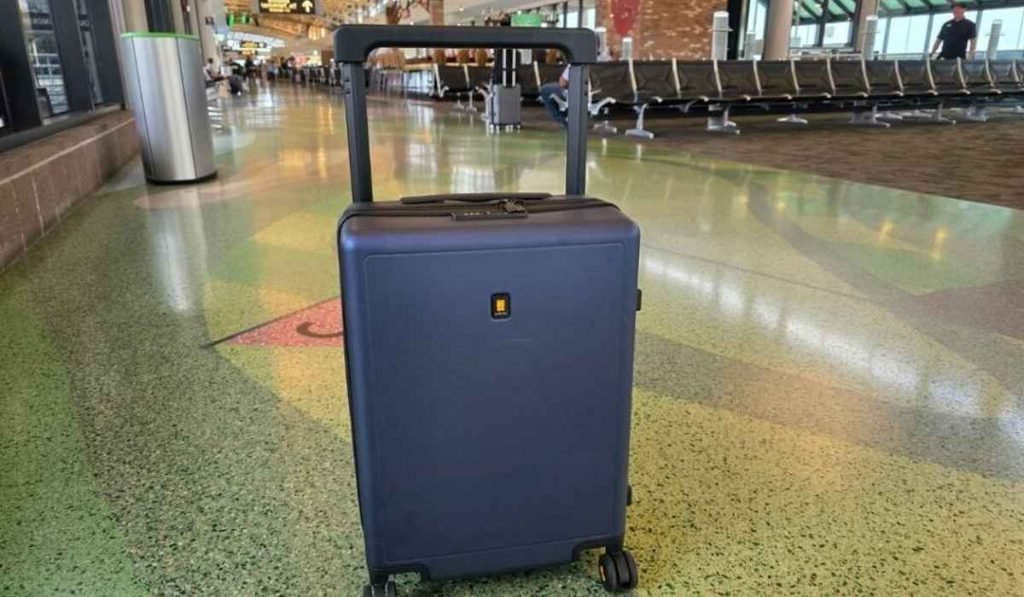
If your itinerary includes several budget airlines, choose a case that fits the strictest airline.
For maximum flexibility, consider a bag close to 40 x 30 x 20 cm. This can work as a free personal cabin bag on both Ryanair and Wizz Air in 2026. The downside is that packing for a full week becomes harder.
If you are paying for an overhead cabin bag, a 55 x 40 x 20 cm case is a strong middle ground. It matches Ryanair’s larger Priority size and stays within Lufthansa’s 55 x 40 x 23 cm limit. However, it is too large for a free under-seat allowance.
For airlines with generous overhead limits, a 55 x 40 x 23 cm suitcase offers more room. Always check every flight before departure.
Hard-shell vs soft-side luggage
The best carry on luggage Europe travelers choose will depend on how they move around.
Hard-shell cases
Hard-shell luggage is useful when you want more protection for electronics or fragile items. Polycarbonate offers a good balance between strength and weight.
Pros
- Better impact protection
- Easy to clean
- Structured shape
- Good for organized packing
Cons
- Less flexible when overfilled
- Some models are heavy
- Scratches can show
Soft-side cases
Soft luggage is easier to squeeze into tight train racks or overhead spaces. Many models also have outside pockets.
Pros
- Flexible exterior
- Quick access to small items
- Often lighter
- Useful pockets
Cons
- Less impact protection
- Fabric can absorb moisture
- Pockets can reduce interior space
For city-hopping trips, either style can work. Wheel and handle quality may matter more than shell material.
Spinner wheels or two-wheel luggage?
Four-wheel spinner luggage is usually easiest for airports and stations. You can push it beside you instead of pulling it behind you.
Two-wheel luggage can perform better on rough sidewalks because larger wheels may handle bumps more easily. It can also be easier to control on uneven cobblestones.
If most of your trip involves airports, metro stations, smooth pavements, and hotels, choose four-wheel spinners. If you expect long walks over rough streets, look for larger, durable wheels.
How much should a European carry-on weigh?
A lightweight suitcase is valuable because airline weight rules can be strict. Lufthansa lists an 8 kg limit for its standard carry-on on many fares, while Wizz Air and Ryanair apply 10 kg limits to their larger paid cabin bags.
Try to keep the empty case around 2 to 3 kg when possible. That leaves more capacity for clothes, shoes, toiletries, and electronics.
A heavy suitcase may look premium but become inconvenient quickly. For a one-week trip, a lightweight case with a smart interior can be more useful than a heavier model with slightly more capacity.
What to pack in European carry-on luggage

For a typical 5-to-7-day city trip, consider:
- Four or five tops.
- Two or three pairs of trousers.
- One light jacket or sweater.
- Five to seven pairs of underwear and socks.
- Comfortable walking shoes, worn during the flight.
- Compact toiletries.
- Phone charger and travel adapter.
- Small laundry bag.
- Essential medicines and travel documents.
Wear your bulkiest shoes and jacket during travel. Packing cubes can separate clothing and compress soft items without forcing the suitcase shut.
Features worth paying extra for
You do not need every premium feature. Spend more on the parts that affect daily use.
Strong wheels
Bad wheels can turn a good suitcase into a frustrating one. Check that they roll smoothly and do not wobble.
Good handle
The telescopic handle should lock firmly at different heights. A loose handle becomes annoying quickly.
Compression system
Internal straps, zip panels, or compression boards can keep clothes in place and make packing easier.
Useful warranty
Frequent travelers should consider brands with solid warranties and replacement parts. Wheels and handles are among the components most likely to need attention.
Common mistakes to avoid
Even the best carry on luggage Europe travelers choose can become a problem if the bag is packed or measured incorrectly.
Avoid:
- Buying a 55 cm case without checking total dimensions.
- Forgetting that wheels and handles may count.
- Choosing luggage based only on liters.
- Ignoring the weight limit.
- Assuming every European airline has the same rules.
- Overfilling a soft bag beyond its listed measurements.
A suitcase that fits the manufacturer’s dimensions can still fail an airline’s baggage sizer if it expands beyond those measurements.
How to choose the best carry-on for your trip
Use this quick method:
Step 1: List every airline. Include connecting and return flights.
Step 2: Check your exact fare. Basic, standard, priority, and bundled fares can differ.
Step 3: Choose the strictest size. Do not plan around the most generous airline.
Step 4: Check empty weight. A lighter case gives you more usable packing capacity.
Step 5: Measure the full case. Include wheels, handles, and pockets.
Step 6: Match the wheels to your route. Spinners are excellent for airports, while larger wheels can help on rough streets.
Step 7: Test the interior. Make sure your normal clothes and electronics fit without forcing the zipper.
FAQs
- What is the best carry on luggage Europe size?
- A case around 55 x 40 x 20 cm is a practical overhead size, while 40 x 30 x 20 cm offers broader free-bag compatibility.
- Can I use one carry-on for Ryanair and Lufthansa?
- Yes, a 55 x 40 x 20 cm case fits the larger cabin dimensions of both, but Ryanair requires the appropriate Priority allowance.
- Is hard-shell or soft luggage better for Europe?
- Hard-shell offers more protection, while soft luggage is flexible and often easier to fit into tight spaces.
- How heavy should my European carry-on be?
- Aim for about 2 to 3 kg empty so more of your airline weight allowance remains for packing.
- What should I check before buying carry-on luggage?
- Check your airlines, fare-specific allowance, full dimensions, empty weight, wheels, handle, and warranty.
The best carry on luggage Europe travelers choose should make the trip easier, not add another problem. Focus on exact dimensions, low empty weight, reliable wheels, and an interior that suits how you pack. If your trip includes several airlines, build your choice around the strictest baggage rule and you will be far less likely to face an unpleasant surprise at the gate.