 admin
admin
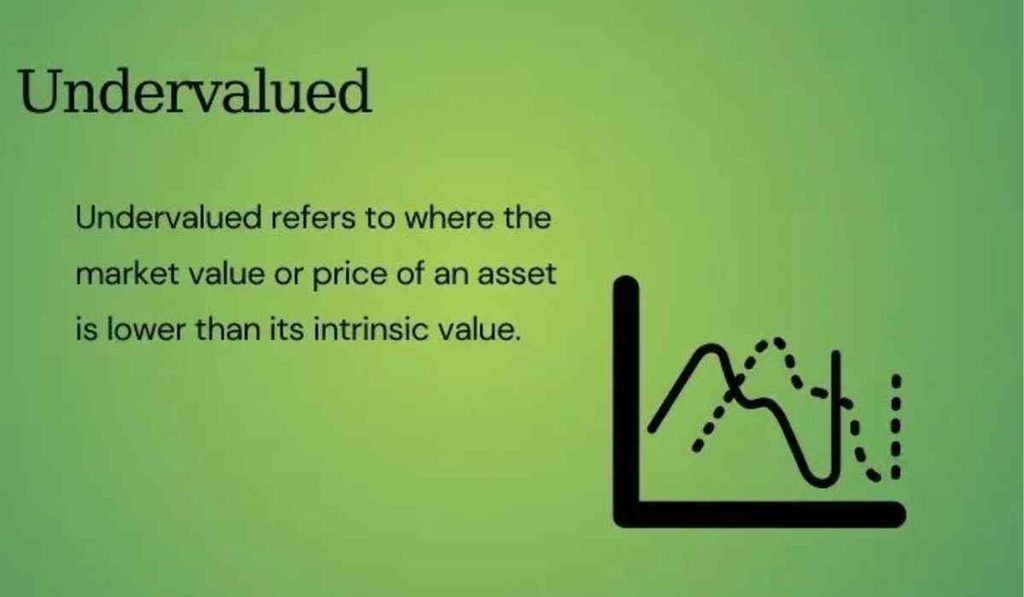
A stock can be considered undervalued when its market price appears lower than a reasonable estimate of what the underlying business may be worth based on its financial strength, cash flow, assets, earnings, and future prospects.
That sounds simple, but finding undervalued stocks is not just about looking for a low share price. A $5 stock can be expensive if the company has weak finances, while a $200 stock can be relatively inexpensive if its earnings and cash flows support a higher valuation.
Investors often use valuation ratios, financial statements, industry comparisons, and estimates of intrinsic value to investigate what makes a stock undervalued. FINRA notes that value investors may look at measures such as price-to-earnings and price-to-book ratios when assessing whether a security is trading below its estimated worth.
What Does Undervalued Mean in Stocks?
An undervalued stock is one where the current market price appears lower than the value suggested by the company’s underlying fundamentals.
The key word is appears.
There is no official market label that confirms a stock is undervalued. Intrinsic value is an estimate, and different investors can reach different valuations because they use different assumptions about growth, profits, interest rates, risk, and future cash flows. FINRA describes intrinsic value as an estimate based on factors such as earnings, assets, cash flow, growth prospects, and interest rates.
A stock may look undervalued because:
- Earnings are stronger than the share price suggests.
- The company generates substantial cash.
- The stock trades below comparable companies.
- The market is temporarily worried about the business.
- Valuable assets are not fully reflected in the share price.
- Investors have overlooked an improving business.
- The company is recovering from a temporary setback.
The challenge is separating a genuine valuation gap from a business that deserves a low valuation.
What Makes a Stock Undervalued?

Several factors can contribute to a stock trading below an investor’s estimate of fair value.
The most common are low valuation multiples, strong financial statements, solid cash flow, temporary problems, and a mismatch between current market expectations and future business performance.
A useful starting point is to compare the company’s current valuation with its own history and with similar businesses.
Quick overview
| Factor | What to check | Why it matters |
| P/E ratio | Price compared with earnings | Shows how much investors pay for earnings |
| P/B ratio | Price compared with book value | Useful for asset-heavy businesses |
| Free cash flow | Cash generated after capital spending | Shows cash available for business needs |
| Debt | Total and net debt | High debt can increase financial risk |
| Revenue | Sales growth or decline | Shows business demand |
| Profit margins | Operating and net margins | Helps assess profitability |
| ROE/ROIC | Returns generated from capital | Helps measure business efficiency |
| Industry valuation | Compare similar companies | Provides market context |
| Intrinsic value | Estimated business worth | Helps compare value with price |
No single row proves that a stock is undervalued.
Look at the Price-to-Earnings Ratio
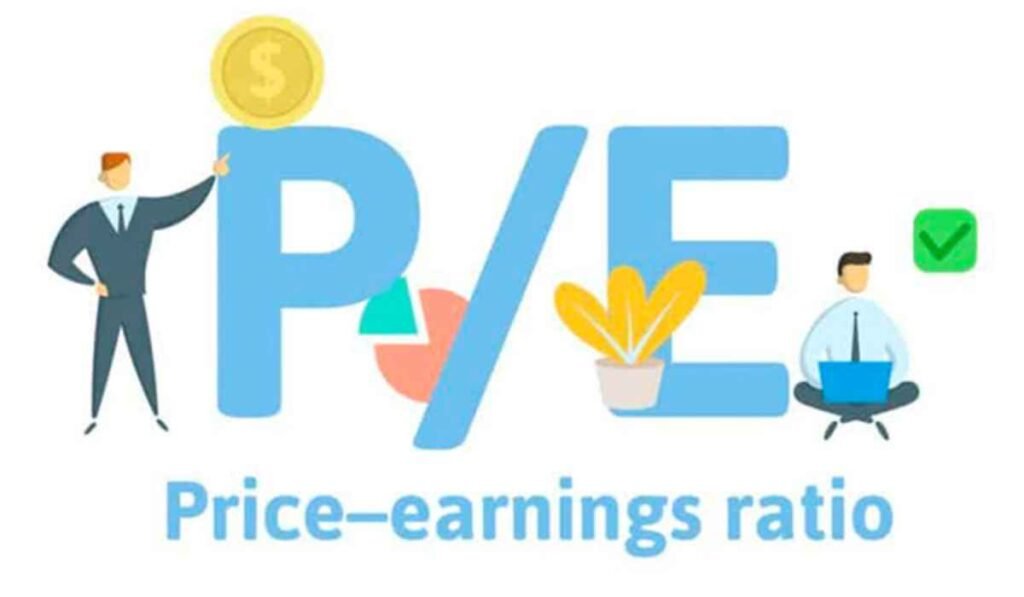
The price-to-earnings, or P/E, ratio is one of the most widely used valuation measures.
It compares a company’s share price with its earnings per share.
For example, if a stock trades at $40 and earns $4 per share, its P/E is 10.
A low P/E can make a company look inexpensive compared with:
- Its own historical P/E
- Competitors
- The broader market
- Its expected earnings growth
But a low P/E is not automatically a bargain.
Investors may be assigning a low multiple because they expect earnings to fall, the business faces major risks, or the company’s industry is declining.
FINRA identifies P/E as one of the common metrics used in valuation analysis.
Compare Price-to-Book Value
Another way to understand what makes a stock undervalued is to compare its market price with its book value.
Book value generally represents assets minus liabilities, or shareholders’ equity.
The price-to-book ratio compares the company’s market value with that accounting value.
A P/B below 1 can mean a stock trades below its book value. However, that does not automatically make it cheap.
FINRA points out that P/B can be particularly useful when comparing similar businesses and asset-heavy industries such as real estate and utilities. It can be less useful for businesses whose major value comes from brands, intellectual property, or other intangible assets.
This is an important distinction.
A company with valuable software, a powerful brand, or proprietary technology may have significant economic value that does not appear fully on its balance sheet.
Strong Free Cash Flow Can Reveal Hidden Value
Profit is important, but cash flow can provide another view of a company’s financial strength.
Free cash flow generally represents the cash a company generates after necessary capital expenditures.
A business that consistently generates strong free cash flow may have more flexibility to:
- Reduce debt
- Buy back shares
- Pay dividends
- Invest in expansion
- Build cash reserves
- Fund research and development
FINRA’s investment-analysis materials include price-to-free-cash-flow among commonly used valuation measures.
If a company produces substantial cash but trades at a modest valuation compared with similar businesses, it may deserve closer research.
However, investors should check whether the cash flow is sustainable.
One unusually strong year does not necessarily represent normal long-term performance.
Temporary Problems Can Create Undervaluation

Sometimes a stock falls because investors become concerned about a short-term problem.
Examples include:
- A weak quarter
- A temporary supply issue
- Higher operating costs
- A product delay
- A short-term legal dispute
- A cyclical downturn
- A temporary decline in demand
If the underlying business remains healthy and the problem is temporary, the market price may eventually recover.
But this is where careful research matters.
A problem that looks temporary may become permanent.
Investors need to examine company filings, management commentary, industry conditions, and financial results before deciding whether the market reaction is excessive.
Compare a Stock With Its Industry
Looking at one company’s P/E or P/B ratio in isolation can be misleading.
Suppose Company A has a P/E of 12 while its competitors trade at 20.
That difference could indicate a potential valuation gap.
But it could also reflect differences in:
- Revenue growth
- Profit margins
- Debt
- Business quality
- Competitive position
- Geographic exposure
- Future earnings expectations
This is why what makes a stock undervalued often depends on relative comparisons rather than one absolute number.
FINRA notes that value investing can involve comparing a security with its peers and considering broader business or economic trends.
Check Revenue and Earnings Trends

A low valuation is more interesting when the underlying business is stable or improving.
Start with revenue.
Ask:
- Is revenue growing?
- Is growth slowing?
- Are customers leaving?
- Is the company entering new markets?
- Is pricing increasing?
- Are sales dependent on one product?
Then examine earnings.
Look at:
- Gross profit
- Operating income
- Net income
- Earnings per share
- Profit margins
FINRA notes that financial statements provide information about a company’s operations, profitability, debt, assets, liabilities, and cash flows.
A company with stable sales and improving margins may deserve a different valuation from one whose revenue and profits are shrinking.
Debt Can Make a Cheap Stock Risky
Debt is easy to overlook when searching for undervalued stocks.
A company can have a low P/E while carrying a large debt burden.
High debt can create pressure when interest costs rise or business conditions weaken.
Check:
- Total debt
- Cash on hand
- Net debt
- Interest expense
- Debt-to-equity
- Debt relative to operating earnings
- Interest coverage
Enterprise value can also provide useful context because it incorporates equity value, debt, and cash. FINRA explains that EV can make valuation comparisons more comprehensive when companies have different debt levels.
A stock that looks cheap based only on its P/E may look less attractive after considering its debt.
Look at Return on Capital
Strong businesses often produce attractive returns on the money invested in them.
Useful measures include:
- Return on equity, or ROE
- Return on assets, or ROA
- Return on invested capital, or ROIC
These measures can help investors understand how efficiently a company uses its resources.
A company trading at a modest valuation while producing healthy returns on capital may deserve deeper research.
However, these ratios should be compared with similar companies because normal returns vary widely between industries.
Estimate Intrinsic Value Carefully
Intrinsic value is central to the question of what makes a stock undervalued.
The basic idea is to estimate what the business may be worth based on its expected future financial performance.
Common approaches include:
Discounted cash flow
A DCF model estimates future cash flows and discounts them back to today’s value.
Earnings-based valuation
An investor may estimate future earnings and apply a reasonable P/E multiple.
Asset-based valuation
For asset-heavy companies, investors may focus more heavily on the value of property, investments, inventory, and other assets.
Comparable-company analysis
This approach compares valuation multiples with similar businesses.
There is no single perfect method.
FINRA notes that intrinsic value is subjective because different analysts can assess future earnings, growth, interest rates, and risk differently.
A Stock Can Be Cheap for a Good Reason
One of the biggest mistakes investors make is assuming a low valuation means the market is wrong.
Sometimes the market price is low because the company’s future really does look weak.
This is known as a value trap.
Warning signs can include:
- Revenue falling for several years
- Shrinking profit margins
- Rising debt
- Persistent negative free cash flow
- Loss of market share
- Weak competitive advantages
- Frequent share dilution
- Poor capital allocation
- Major regulatory problems
- Declining industry demand
A stock can have a P/E of 5 and still become cheaper if earnings continue falling.
How to Research an Undervalued Stock
If you want to investigate what makes a stock undervalued, use a repeatable process instead of relying on one ratio.
Step 1: Understand the business
Know how the company makes money and what drives demand.
Step 2: Read recent financial statements
Review the income statement, balance sheet, and cash flow statement. FINRA notes that these statements provide key information about a company’s financial condition and operations.
Step 3: Check valuation ratios
Look at P/E, P/B, EV/EBITDA, price-to-free-cash-flow, and other relevant measures.
Step 4: Compare competitors
Use companies with similar business models and financial characteristics.
Step 5: Examine debt
Make sure the balance sheet can support the business during weaker periods.
Step 6: Identify the market’s concern
Ask why investors are currently assigning the stock its valuation.
Step 7: Build your own valuation estimate
Use reasonable assumptions rather than optimistic forecasts.
Step 8: Look for a margin of safety
If your valuation estimate is only slightly above the current price, there may not be much room for error.
Use Current Information, Not Old Numbers
When researching stocks in 2026, make sure your analysis uses recent financial filings and current market data.
Public companies regularly report financial information through SEC filings, including quarterly and annual reports. FINRA notes that these filings provide investors with information about financial performance and position.
Also be careful with old valuation claims shared on social media or investing forums.
The SEC’s 2026 investor guidance warns investors about stock-tip scams on social media and advises against making investment decisions based solely on information from social platforms or apps.
A stock that was undervalued six months ago may have a completely different valuation today.
What Makes a Stock Undervalued in Simple Terms?
The clearest answer to what makes a stock undervalued is a meaningful gap between the current market price and a reasonable estimate of the company’s underlying value.
That gap becomes more interesting when the company has:
- Healthy or improving financial results
- Sustainable cash generation
- Manageable debt
- Competitive strengths
- Reasonable growth prospects
- A valuation below comparable businesses
- A temporary problem rather than permanent damage
Still, no ratio can prove that a stock is undervalued.
The SEC reminds investors that market-risk investments cannot come with guaranteed returns, and performance claims should be evaluated carefully.
FAQs
- What makes a stock undervalued?
- A stock may be considered undervalued when its market price appears lower than a reasonable estimate of its intrinsic value based on fundamentals.
- Is a low P/E ratio enough to show a stock is undervalued?
- No, because a low P/E can reflect declining earnings, high risk, weak growth, or other business problems.
- What financial ratios help find undervalued stocks?
- Common measures include P/E, P/B, EV/EBITDA, price-to-free-cash-flow, and other valuation and profitability ratios.
- Can a stock be cheap and still be overvalued?
- Yes, a low share price or valuation multiple does not guarantee that the company’s underlying business is worth more.
- How do I confirm whether a stock is undervalued?
- Compare its valuation with fundamentals, historical levels, industry peers, financial statements, cash flow, debt, and a reasonable intrinsic-value estimate.
Finding an undervalued stock is really about understanding the gap between price and business value. A low P/E or P/B can be a useful starting point, but the strongest research combines valuation with earnings, cash flow, debt, competitive position, and future prospects. That extra work helps distinguish a potential valuation opportunity from a stock that is simply cheap for a reason.